Making fresh pasta from scratch sounds like a project reserved for Italian grandmothers or professional chefs. In reality, it is incredibly simple, rewarding, and requires only two ingredients.
Table of Contents
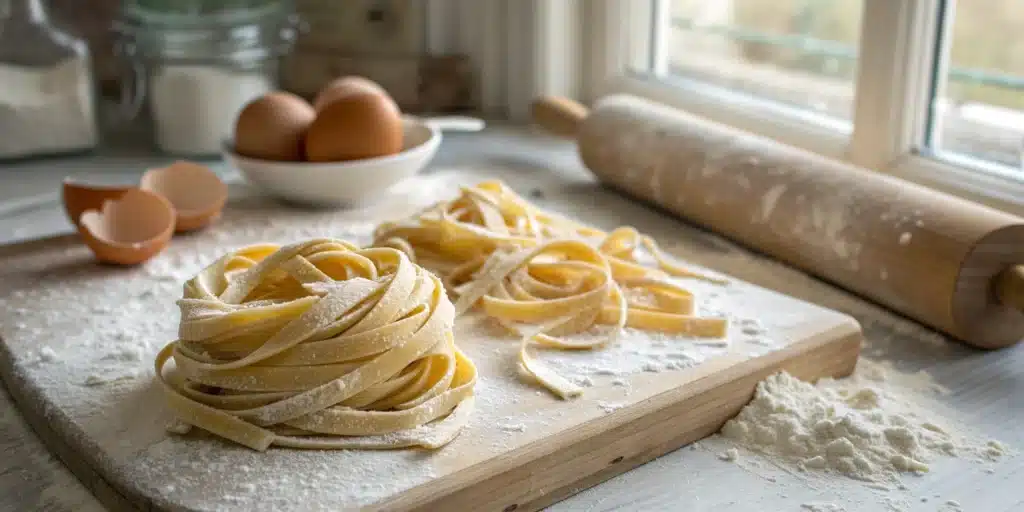
This 2 ingredient gluten-free pasta dough recipe creates tender, springy noodles that taste infinitely better than the dried boxed variety.
You don’t need a pantry full of gums or starches. With just a high-quality gluten-free flour blend and eggs, you can have fresh, homemade pasta on the table in under an hour. It is the ultimate kitchen magic trick.
A Little Story About This Dish
For a long time, I avoided making fresh pasta because I assumed gluten-free dough would be fragile and impossible to work with. Store-bought gluten-free pasta often falls apart or turns into mush, so I resigned myself to a life without good fettuccine.
Then I tried the classic well method with my favorite flour blend. I was shocked. The dough came together effortlessly.
Now, this easy gluten-free pasta dough recipe is a staple in my home. There is something deeply satisfying about turning a pile of flour and a few eggs into a delicious meal. It connects you to your food in a way that opening a box never could.
Get Ready to Cook!
You are about to make fresh pasta that rivals any restaurant. Let’s get set up for success.
What to Expect
Time: About 45 minutes total (including rolling and cooking).
Difficulty: Moderate. It takes a little practice to get the feel of the dough, but it is very forgiving.
Before You Begin
The choice of flour is the most important factor. You need a 1-to-1 baking blend that contains xanthan gum. This mimics the elasticity of gluten, allowing the pasta to stretch and hold its shape.
Unlike traditional wheat pasta, you do not need to knead this dough for a long time. Gluten-free dough doesn’t have gluten strands to develop, so once the flour is incorporated, you are ready to roll.
If you don’t have a pasta machine, you can still make homemade pasta without machine tools by using a rolling pin and a sharp knife, though a machine does get the sheets thinner and more uniform.
The Heart of the Dish: Ingredients You’ll Need
Here are the only two ingredients you need for this fresh gluten-free pasta dough.
| Ingredient | Amount |
| Bob’s Red Mill 1-to-1 Gluten-Free Baking Flour (plus extra for rolling) | 200 grams (~1 ¼ cups + 2 Tbsp) |
| Large Eggs | 3 |
Let’s Get Cooking! Step-by-Step Guide
Follow these simple steps to turn flour and eggs into delicious noodles.
1. Create the Well:
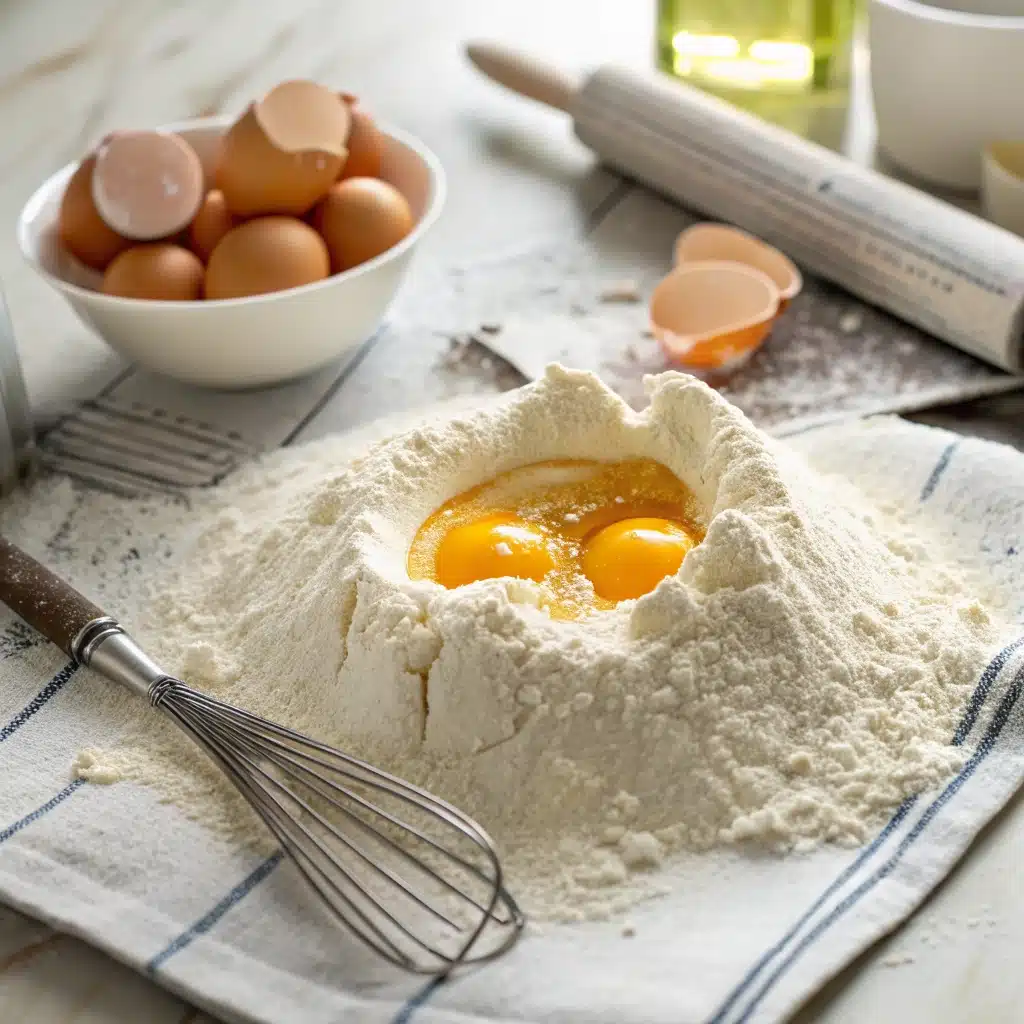
Start with a clean surface, like a counter or a Silpat mat. Dump your flour onto the surface and make a well (a deep hole) in the center of the pile. Crack the eggs directly into this well.
2. Mix the Dough:
Using a fork, gently scramble the eggs in the center. Slowly start pulling in a little bit of flour from the inner walls of the well into the eggs. Continue mixing until the batter becomes too stiff for the fork.
3. Form the Ball:
Switch to your hands. Work the rest of the flour into the egg mixture until it forms a sticky ball. Remember, no heavy kneading is required here; you just want a uniform consistency where the flour is fully absorbed.
4. Section the Dough:
Cut the dough ball into four equal sections. This makes it manageable for rolling. Keep the sections you aren’t working on covered so they don’t dry out.
5. Roll and Flatten:
Dust your surface and the dough with extra flour. Use a rolling pin to flatten one section into a long, thin sheet.
6. Sheet the Pasta:
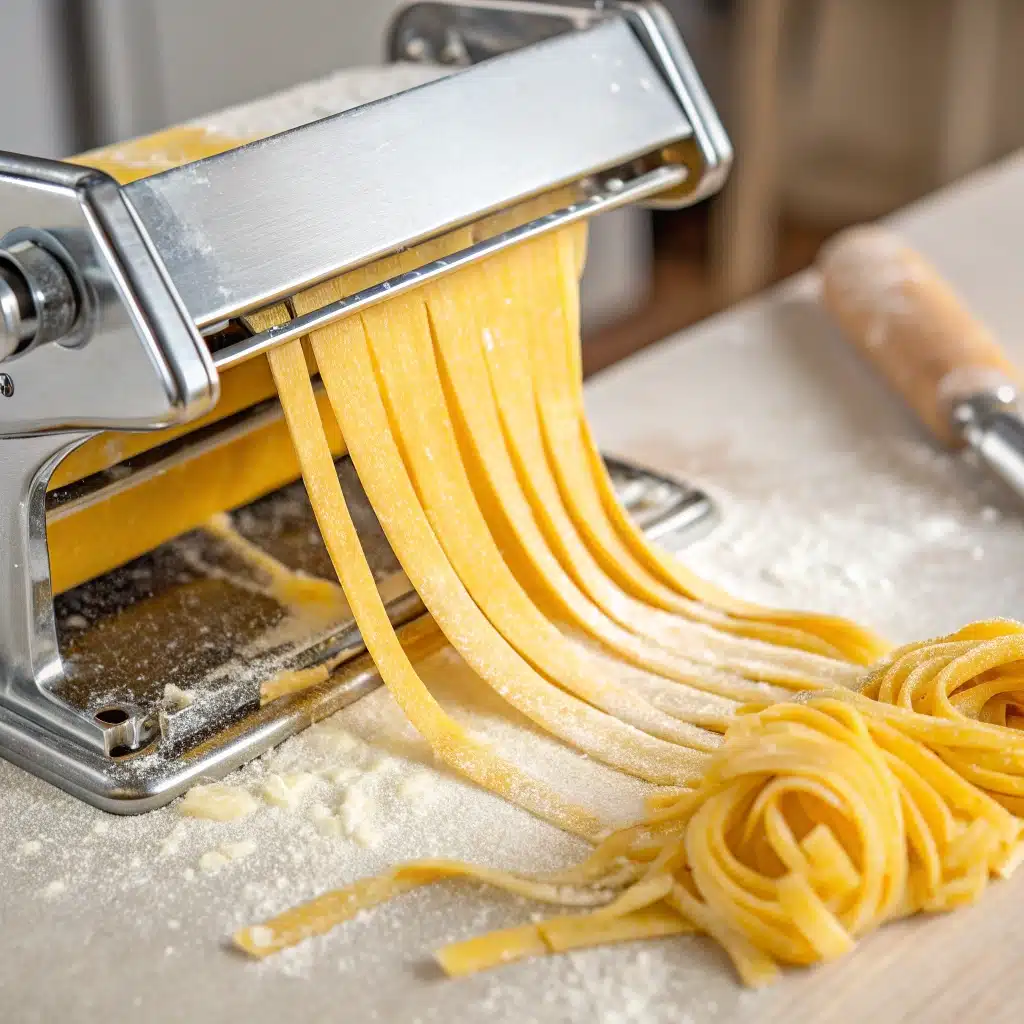
If using a machine, run the dough through Setting #1. Then, fold it or cut it if it’s too long, and run it through Setting #2 to get it nice and thin. Use a knife or cutter to trim any rough edges.
7. Cut the Noodles:
Run the sheet through the cutting attachment of your machine to create your strands (like fettuccine or spaghetti). If making homemade pasta without a machine, simply fold the floured sheet over loosely and slice with a sharp knife. Nest the finished strands on a floured surface.
8. Boil and Serve:
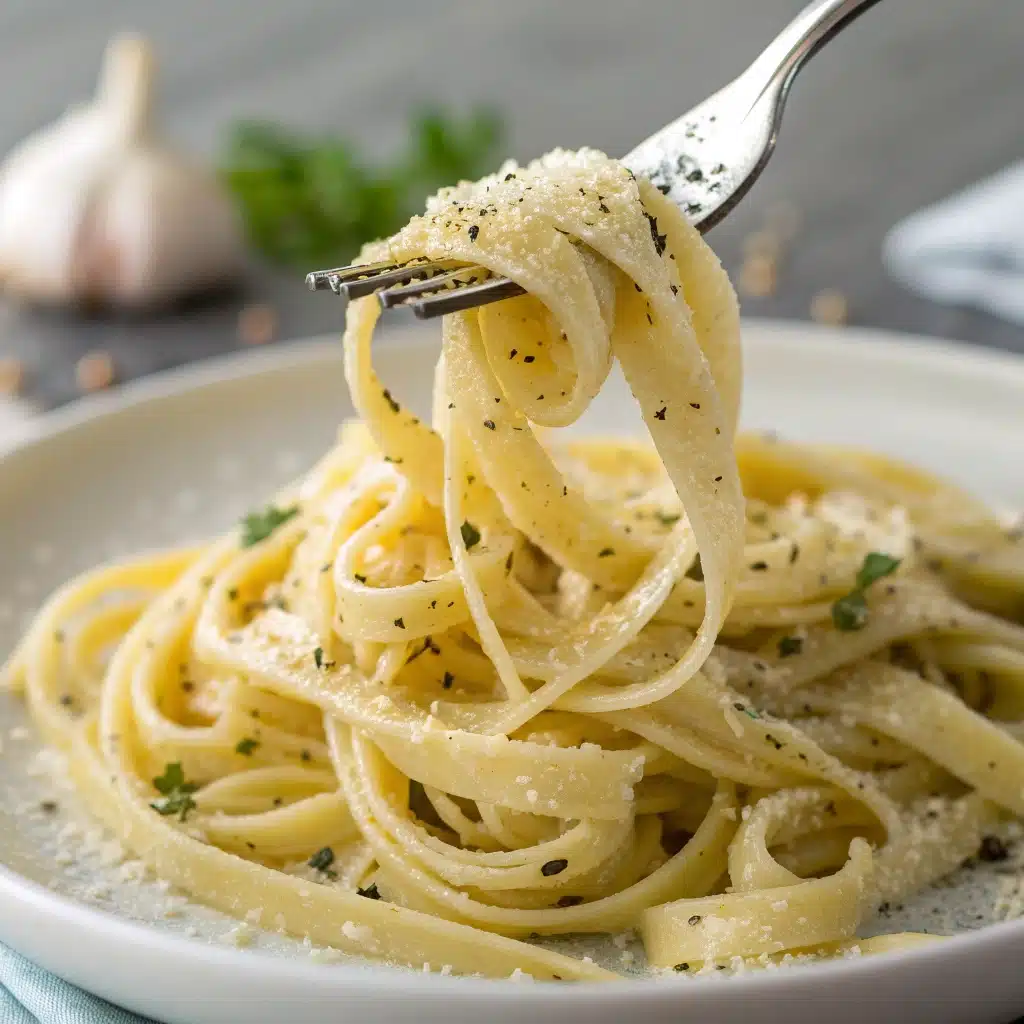
Bring a pot of salted water to a boil. Drop the fresh pasta in and cook for just 1-2 minutes. Fresh pasta cooks incredibly fast! Drain, drizzle with olive oil to prevent sticking, and serve with your favorite sauce.
Mastering the Dish: Pointers for Perfection & How to Store
Here are a few tips to ensure your pasta night is perfect.
Pointers for Perfection
If your flour blend does not already have xanthan gum, you must add 1 teaspoon to the flour before starting. This is the glue that holds everything together. Also, keeping the dough floured as you pass it through the machine prevents it from tearing or sticking to the rollers.
How to Store
Fresh pasta is best eaten immediately. However, you can store uncooked nests of pasta in an airtight container in the fridge for up to 2 days. You can also freeze the nests on a baking sheet and then transfer them to a bag for up to a month. Cook frozen pasta directly in boiling water; do not thaw.
Print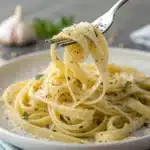
2 Ingredient Gluten-Free Pasta Dough (Homemade & Fresh!)
- Total Time: 45 minutes
- Yield: 4 servings 1x
Description
The easiest 2 Ingredient Gluten-Free Pasta Dough! Made with just a quality gluten-free flour blend and eggs, this fresh pasta is tender, delicious, and better than store-bought. Ready in under an hour.
Ingredients
200 grams Bob’s Red Mill 1-to-1 Gluten-Free Baking Flour (approx. 1 1/4 cups + 2 Tbsp) + extra for rolling
3 large eggs
Instructions
1. Clean and flour your work surface (or use a Silpat mat). Pour the flour onto the surface and create a small well in the center.
2. Crack the eggs into the well. Use a fork to scramble the eggs, gradually incorporating a little bit of flour from the edges at a time.
3. Once the mixture is too stiff for a fork, use your hands to bring the dough together into a sticky ball. Kneading is not required, just ensure the flour is fully incorporated.
4. Place the dough on a floured surface and cut it into four equal sections.
5. Dust a section with flour and roll it out into a flat, thin layer resembling a lasagna sheet.
6. Run the sheet through your pasta machine on Setting #1, then Setting #2 to flatten it evenly. Trim frayed edges with a knife.
7. Run the sheet through the cutting setting of your pasta machine to create strands. Nest the cut pasta on a floured surface.
8. Bring a pot of water to a boil and add a pinch of salt. Add the fresh pasta and cook for 1-2 minutes. Watch carefully as it cooks fast.
9. Drain the pasta and rinse with cold water if desired. Serve immediately with olive oil and sea salt or your favorite sauce.
Notes
Xanthan Gum: If your flour blend lacks xanthan gum, add 1 tsp. This provides elasticity.
Sticky Dough: The dough should be slightly sticky but manageable. Always flour your machine and dough generously to prevent sticking.
Cooking: Do not overcrowd the boiling water. Cook in batches if necessary to prevent clumping.
Oil: Toss drained pasta with a little olive oil to keep strands from sticking together.
- Prep Time: 40 minutes
- Cook Time: 5 minutes
- Category: Main Course, Pasta, DIY
- Method: Boiling
- Cuisine: Italian
Nutrition
- Serving Size: 1 serving
- Calories: 401
- Sugar: 3g
- Sodium: 107mg
- Fat: 10g
- Saturated Fat: 2g
- Unsaturated Fat: 0g
- Trans Fat: 0g
- Carbohydrates: 65g
- Fiber: 9g
- Protein: 18g
- Cholesterol: 279mg
These recipes are an excellent source of creativity for your gluten-free cooking:
- The Best Creamy Cashew Cream Cajun Chicken Pasta (Gluten-Free & Dairy-Free!)
- The Best Gluten-Free Lemon Chicken Pasta (Dairy-Free!)
- The Creamiest Gluten Free Coconut Milk Alfredo (Vegan!)
Your Burning Questions Answered!
Here are answers to common questions about gluten-free pasta dough making.
1. What is a 2 ingredient pasta dough?
A 2 ingredient pasta dough is the traditional method of making fresh noodles using only flour and eggs. The liquid from the eggs hydrates the flour to create a firm dough that can be rolled thin. It is richer and has a better bite than dried pasta made from flour and water.
2. What are the two ingredients in gluten-free pasta recipe?
In this specific recipe, the two ingredients are Bob’s Red Mill 1-to-1 Gluten-Free Baking Flour and eggs. The flour blend includes rice flour, potato starch, sorghum flour, tapioca flour, and xanthan gum, which provides the necessary structure to replace wheat.
3. Can you make pasta dough with gluten-free flour?
Yes, absolutely! The best gluten free flour for pasta is an all-purpose “measure-for-measure” blend. While single flours like rice flour or almond flour won’t work on their own because they lack binding power, a formulated blend allows you to roll, shape, and boil pasta just like the traditional wheat version.
Dig In & Enjoy!
You have unlocked the secret to fresh, homemade Italian dinners. Enjoy your tender, delicious noodles with a simple butter sauce or a rich bolognese!
Follow me on Pinterest to find all my latest projects and see what’s new.