Table of Contents
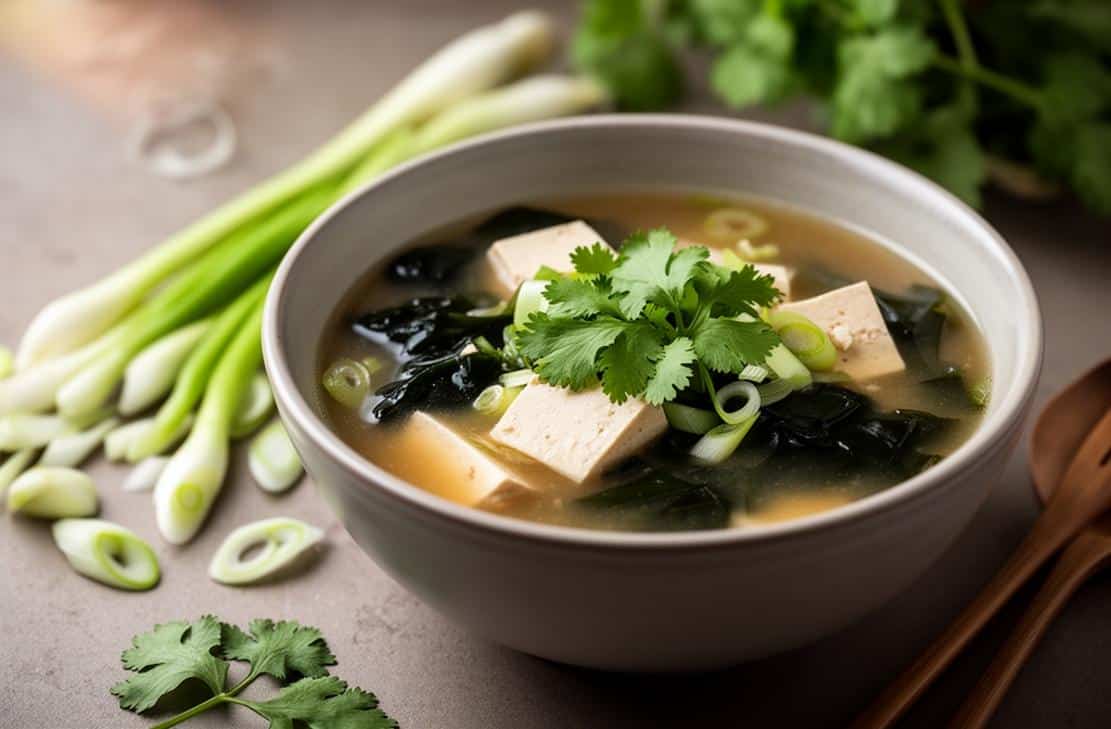
Warm up with a comforting bowl of gluten free miso soup! This simple yet flavorful recipe is perfect for any meal. Packed with umami-rich ingredients, it’s a delicious and nourishing option for those avoiding gluten.
I first discovered gluten free miso soup during a trip to Japan. The rich, savory flavors instantly won me over. Now, it’s a staple in my kitchen, especially on chilly evenings. It’s amazing how such simple ingredients can create something so satisfying!
Get ready to cook up a bowl of warmth and comfort with this easy gluten free miso soup recipe.
What to Expect
- Time: 15 minutes
- Difficulty: Easy
Before You Begin
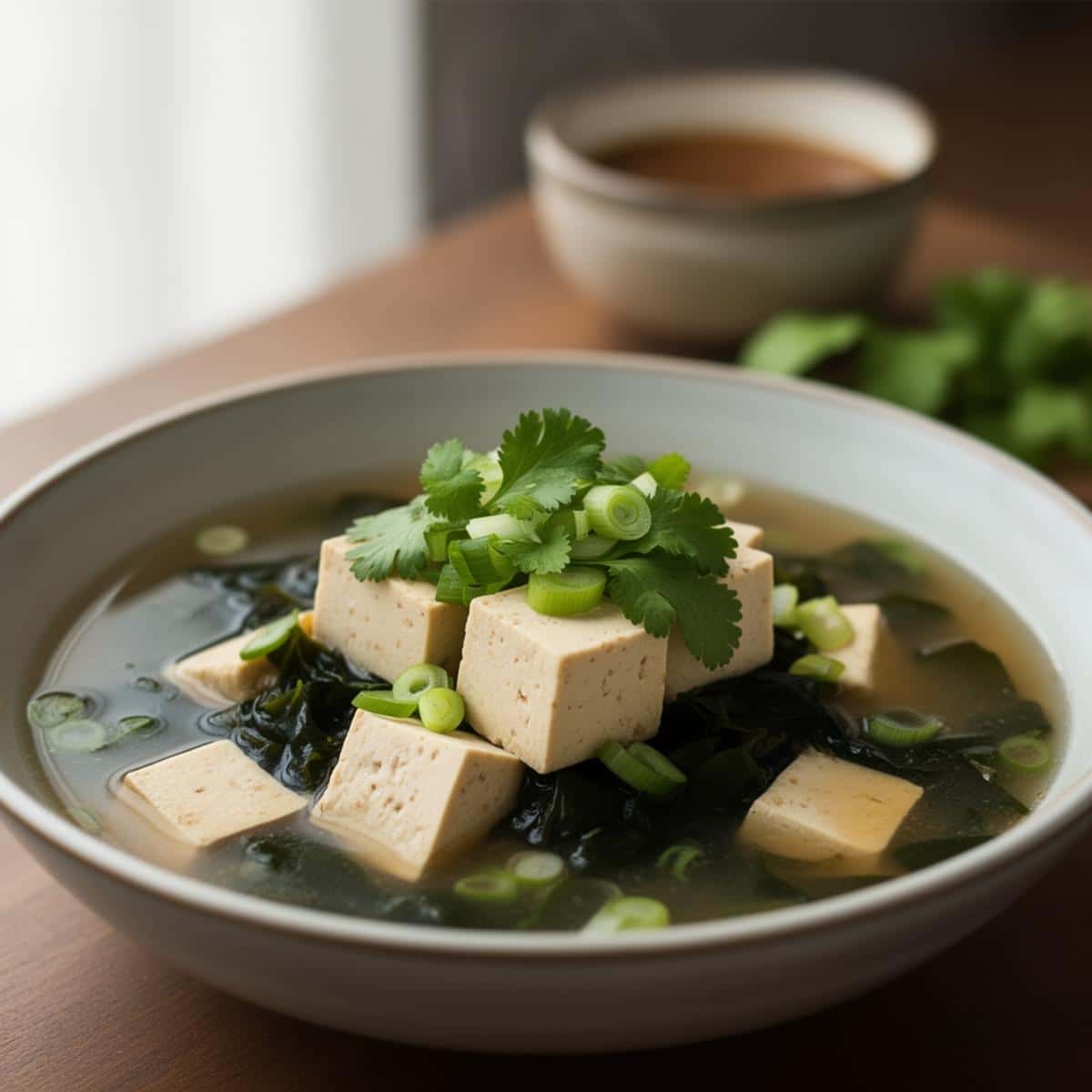
Before you start, make sure you have all your ingredients prepped and ready. This recipe comes together quickly, so having everything on hand will make the process smooth and enjoyable.
Ingredients You’ll Need
| 4 cups water |
| 1 teaspoon hondashi powder |
| ¼ cup wakame seaweed, cut or broken into smaller ½ inch pieces |
| 8 ounces tofu, drained and cut into ½ inch cubes or smaller |
| 4 tablespoons gluten free miso paste (white, yellow, or red miso) (You can also use regular, not gluten free miso paste as well) |
| 1 stalk green onion, thinly sliced (optional) |
Step-by-Step Guide
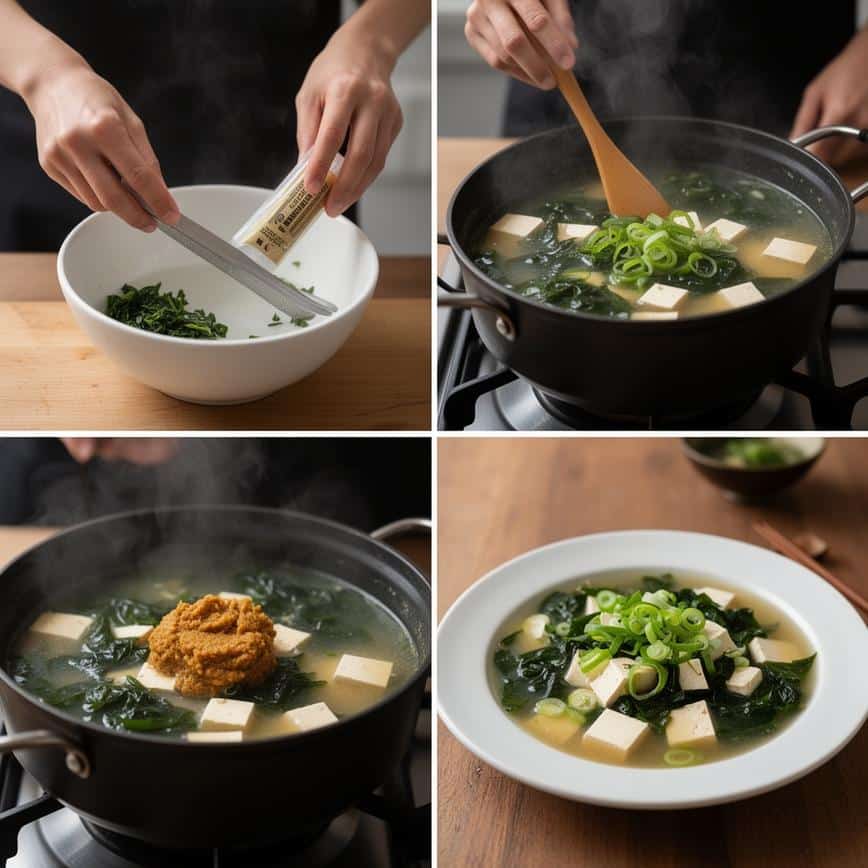
- Heat the water to a boil and add the hondashi powder, wakame seaweed, and tofu cubes.
- Bring the soup back up to a boil, then reduce the heat to a high simmer.
- Let the soup simmer for about 3 minutes or until the wakame seaweed is rehydrated.
- Turn off the heat and use a strainer to dissolve the miso paste into the soup. If you don’t have a strainer, you can scoop out a small amount of soup to dissolve the miso paste, then add it back into the soup.
- Add the sliced green onions and serve the miso soup while hot and enjoy!
Notes
You must buy a paste explicitly labeled “Gluten-Free” (Brands like Hikari Miso or Eden Foods certified GF).
- Rule of Thumb: Generally, “White Miso” (Shiro) is rice-based and safer, but never assume. Read the label.
- Best: Make your own simple stock by soaking a piece of Kombu (dried kelp) in water.
- Instant: Buy a specific Gluten-Free Instant Dashi or use a Gluten-Free Vegetable Broth or Fish Sauce as a substitute.
- Some recipes add a splash of soy sauce for depth.
- The Danger: Traditional Soy Sauce = Wheat.
- The Fix: Use Tamari.
Buy Plain Silken Tofu.
Pointers for Perfection & How to Store
For the best flavor, make sure not to boil the miso paste directly as it can become bitter. Instead, dissolve it in a bit of warm soup before adding it back to the pot. This gluten free miso soup is best enjoyed fresh but can be stored in the refrigerator for up to 3 days. Reheat gently on the stove, being careful not to boil.
If you’re looking for more gluten-free recipes, check out this Gluten Free Lentil Soup Recipe.
Print
Gluten Free Miso Soup: Healthy & Pretty Food
- Total Time: 20
- Yield: 4 servings 1x
- Diet: Gluten Free
Description
This Gluten-Free Miso Soup is the definition of ‘healthy pretty food.’ Packed with colorful spiralized vegetables, silky tofu, and nutrient-dense seaweed, it transforms a simple Japanese staple into a vibrant, gut-healing meal. It uses certified gluten-free miso paste (rice-based) to ensure it is completely safe while maintaining that classic umami depth.
Ingredients
— The Broth Base —
4 cups water (or vegetable broth for deeper flavor)
1 piece kombu (dried kelp strip, approx. 4 inches)
3–4 tablespoons white miso paste (Ensure it is labeled ‘Gluten-Free’ or made from rice/soybeans, NOT barley)
— The ‘Pretty’ Add-ins —
1 medium carrot, spiralized or julienned into thin ribbons
1 small zucchini, spiralized or sliced into half-moons
1 cup baby bok choy or spinach leaves
1 block (12 oz) silken or soft tofu, cut into small cubes
2 tablespoons dried wakame seaweed (rehydrated)
— The Garnish —
2 green onions, thinly sliced on a bias
1 teaspoon toasted sesame oil
1 teaspoon sesame seeds (white or black)
Instructions
1. Prepare the Dashi (Broth): Rinse the kombu strip lightly. In a medium pot, combine the water and kombu. Bring just to a simmer over medium heat. Right before it boils, remove the kombu and discard it. (Boiling kombu can make the broth bitter).
2. Cook the Hard Veggies: Add the spiralized carrots to the hot broth and simmer gently for 2–3 minutes until slightly tender but still bright orange.
3. Add Soft Veggies & Tofu: Add the zucchini, baby bok choy, dried wakame (it will expand instantly), and cubed tofu. Simmer for just 1–2 minutes to warm through. Do not boil vigorously or the tofu will break apart.
4. Dissolve the Miso (Crucial Step): Turn the heat OFF completely. Miso is a fermented food with live probiotics that are destroyed by high heat.
5. Place the miso paste into a small mesh strainer or ladle and lower it partially into the hot broth. Use a spoon or chopsticks to mash the miso through the strainer/ladle into the soup so it dissolves smoothly without clumps.
6. Finish: Stir gently to combine.
7. Serve: Ladle the soup into bowls, ensuring everyone gets plenty of colorful veggies and tofu. Drizzle with a few drops of toasted sesame oil and sprinkle with green onions and sesame seeds for that ‘pretty’ finish.
Notes
Miso Selection: Standard miso often contains barley (which has gluten). Look specifically for ‘White Miso’ (Shiro Miso) made from rice and soybeans. Brands like Hikari or Miso Master often offer certified GF options.
Spiralizing: If you don’t have a spiralizer, use a vegetable peeler to shave the carrots and zucchini into long, elegant ribbons. This gives the soup a beautiful ‘noodle’ look without the grains.
Wakame Prep: Dried wakame expands significantly (about 10x its size). A little goes a long way!
Protein Boost: For a heartier meal, you can add cooked shelled edamame or shrimp.
- Prep Time: 10
- Cook Time: 10
- Category: Soup
- Method: Stovetop
- Cuisine: Japanese
Nutrition
- Serving Size: 1 bowl
- Calories: 140
- Sugar: 4
- Sodium: 680
- Fat: 5
- Saturated Fat: 1
- Unsaturated Fat: 3
- Trans Fat: 0
- Carbohydrates: 12
- Fiber: 3
- Protein: 10
- Cholesterol: 0
Your Burning Questions Answered!
- Can I use regular miso paste?
- Yes, you can use regular miso paste if you don’t need the soup to be gluten-free.
- What type of tofu is best?
- Firm or extra-firm tofu works best as it holds its shape during cooking.
Can I add other vegetables?
Absolutely! Feel free to add mushrooms, spinach, or any other vegetables you enjoy.
Dig In & Enjoy!
There you have it—a simple, delicious, and comforting bowl of gluten free miso soup. Perfect for any time of the day, this recipe is sure to become a favorite. For more delicious ideas, follow me on My Pinterest.